When do I start? Where do I start? Why am I not committed already? Am I behind?
First off, take a breath. There is A LOT that goes into the baseball recruiting process, and every athlete’s path is going to look a little different. I am not going to sit here and claim that there is one perfect way to get recruited because there isn’t. I have been fortunate enough to see this process from a few different sides. I went through it as a player, spent time as a college coach and recruiter, and now work around recruiting every day. If there is one thing I have learned through all of that, it is that too many athletes and families feel like they are behind before they even really get started.
I understand why. You see commitments posted all over social media, hear about another player getting an offer or find out that someone your age is already talking to schools. Naturally, you start wondering, “Should I be doing more?”
Maybe, but maybe not.
A lot of that depends on where you are in high school. What I would tell a freshman to focus on is going to be very different from what I would tell a junior. Recruiting is a process, and there is no reason to rush through one part of it just because you see someone else doing something different.
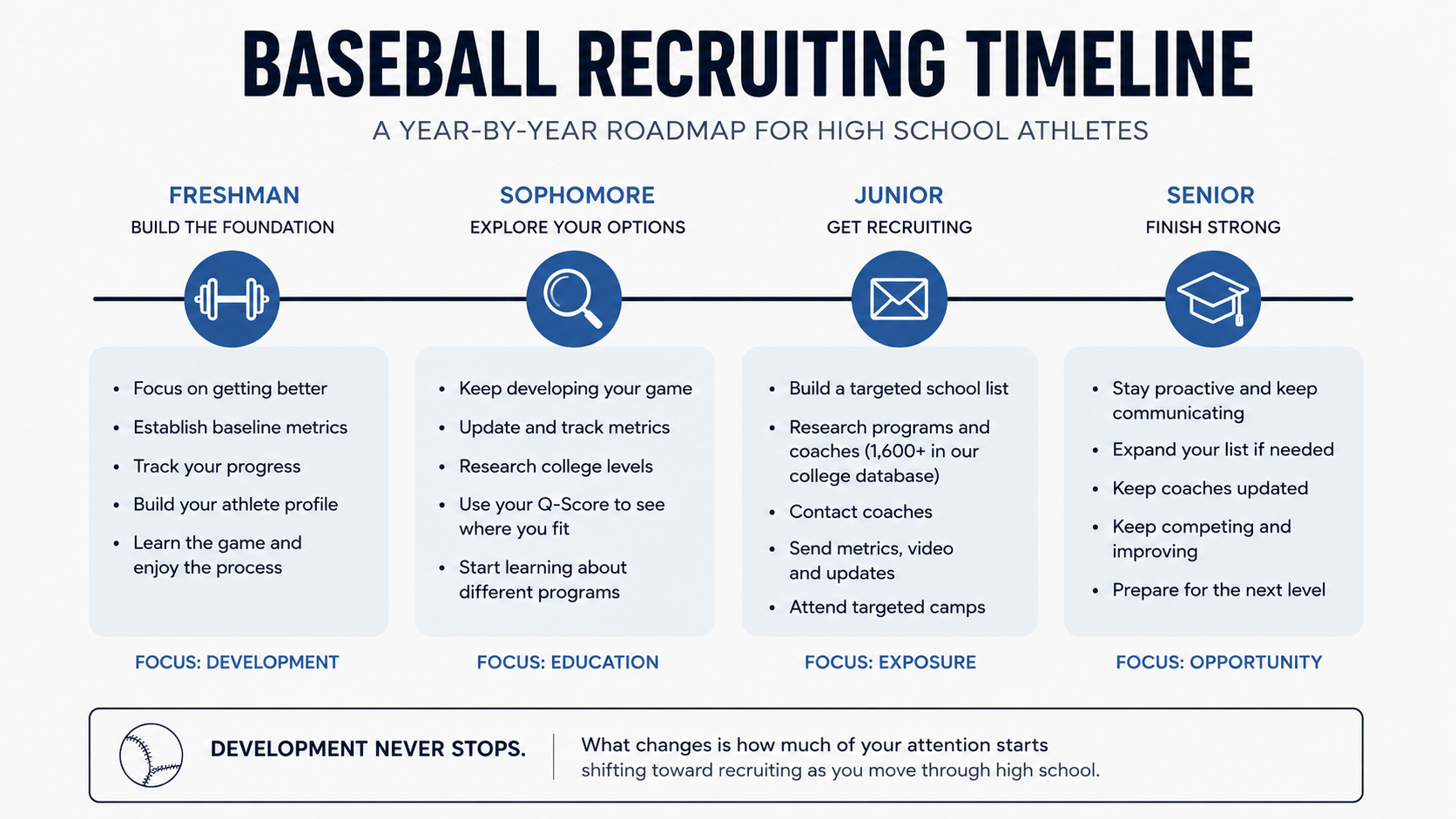
So, where should you actually be? Let’s break it down year by year.
Freshman Year: Develop, Develop, Develop
Long gone are the days when freshmen need to be worried about committing to a college. If you are a freshman reading this, I want you to worry a lot less about who is recruiting you and a lot more about becoming a better baseball player.
Get stronger, get faster, improve your swing, throw harder, become a better defender and learn how to play the game. You have four years of high school baseball ahead of you, and there is going to be plenty of time to worry about everything else that comes with recruiting.
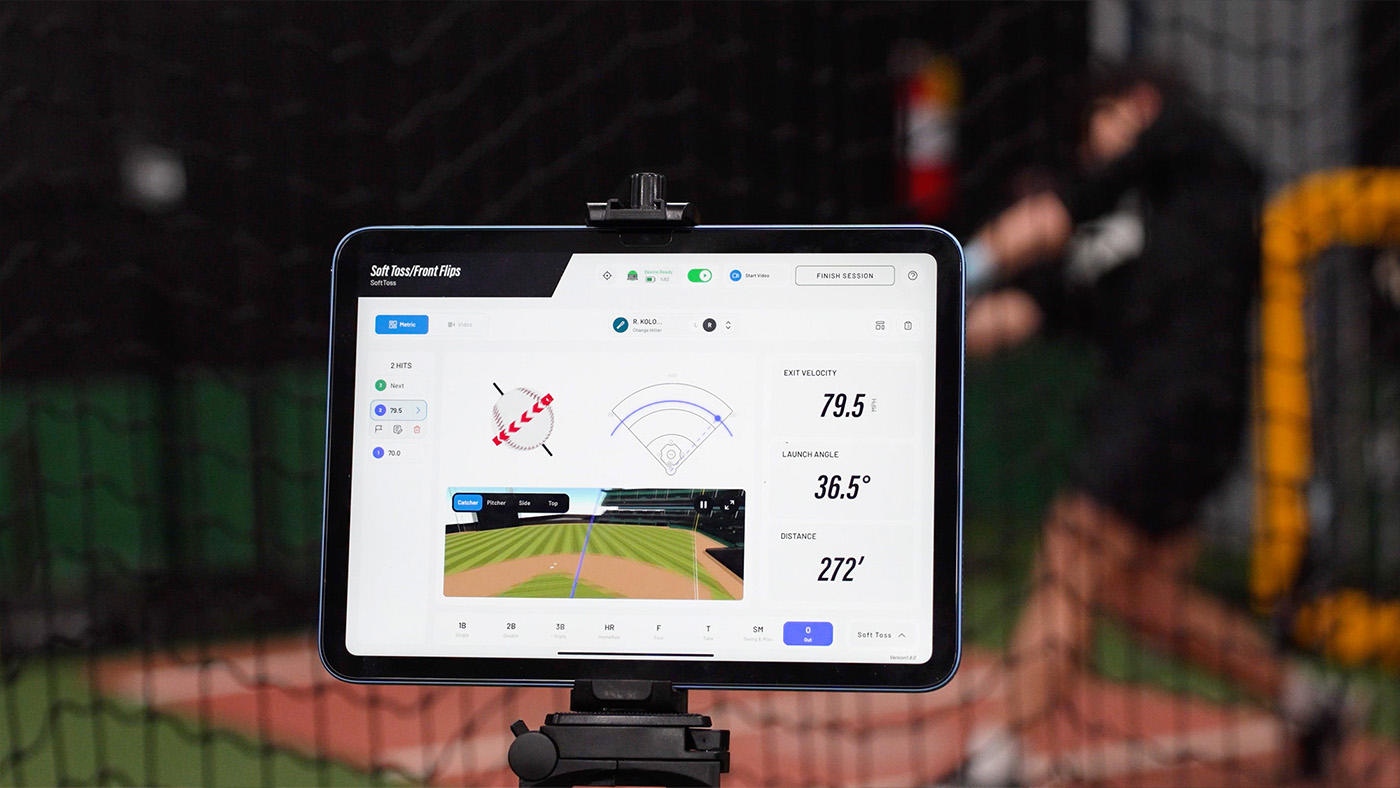
What I would start doing, though, is figuring out where you actually stand as a player. Start getting your metrics and establishing a baseline. That could be exit velocity, throwing velocity, 60 time, pop time or whatever makes sense for your position. Your numbers don't need to look like a college baseball player's numbers yet. You're a freshman. That's not the point.
Let's say your exit velocity is 82 today and a year from now it is 89. Now we can actually see that the work you are putting in is translating to improvement. If you never measured the 82 in the first place, it becomes a lot harder to see how far you've come.
This is one area where I think using something like your free QuestFit profile early can really help. You can keep your verified metrics, video and performance data in one place and continue adding to it as you develop. Instead of getting to junior year and trying to remember numbers from two years ago or scrambling to put everything together, you already have that history built.
That's really what I want freshman year to be about. Play baseball, train, compete, start understanding your numbers and enjoy getting better. You have plenty of time for the rest.
Sophomore Year: Keep Building, Start Looking Around
Sophomore year is where I would start paying a little more attention to the recruiting side of things, but I still don't want it taking priority over development. You are probably already a very different player than you were as a freshman, and hopefully your metrics are starting to show that.
Keep tracking them, keep getting stronger and keep working on the areas of your game that need improvement. At the same time, this is when I would start educating yourself on what college baseball actually looks like.
And I don't just mean watching SEC baseball on TV and deciding that's where you want to play.
Take some time and look at Division I, Division II, Division III, NAIA and junior college programs. Look at their rosters and specifically look at the players who play your position. How big are they? What do their metrics look like? Where did they play before college? You can learn a lot just by paying attention to the types of players different programs recruit.
This isn't about sitting down at 15 or 16 years old and creating your final list of colleges. It's about starting to understand the landscape. One of the biggest mistakes I see in recruiting is athletes deciding what level they think they should play at without really knowing what players at that level actually look like.
This is also where your QuestFit Q-Score can start giving you some direction. Your Q-Score uses your verified performance data to help show where you currently fit as a player. The important word there is currently. You are still developing, and as your numbers improve, where you fit can change too. The idea isn't to put a label on you as a sophomore. It is to give you some perspective on where you are right now and what you may need to improve to get where you want to go.
You don't need to have everything figured out yet. Just start doing your homework. The more you understand now, the easier it is going to be to make better decisions when recruiting becomes more serious.
Junior Year: Now We Get Serious
Junior year is where the conversation starts to change. By this point, recruiting needs to become much more intentional.
Hopefully you have a couple years of development behind you, your metrics are becoming more meaningful, you have good video and you have varsity and travel baseball experience to go along with it. You should have a much better idea of who you are as a player than you did when you first walked into high school.
Now we need to figure out where that player fits.
This is when I would really start building out a list of schools, and please, don't just make a list of the biggest programs you can think of. There is so much more that should go into this decision.
Look at the roster. Look at your position. Look at the current freshmen and sophomores who could still be there when you arrive. Look at the type of player that program recruits. Then start thinking about everything outside of baseball too. Does the school have what you want academically? Is it somewhere you could actually see yourself living for four years? Does the overall fit make sense?
This is another area where QuestFit can make the research side a little easier. Our college database has information on more than 1,600 college baseball programs, including coach contact information, and you can use your Q-Score to compare where you currently stand with different programs. Again, that doesn't mean a score gets to decide where you can or can't play. Recruiting doesn't work that way. It gives you a starting point so you can make a more educated list instead of blindly emailing hundreds of schools and hoping something sticks.
Once you have that list, start communicating. Email coaches, send your profile, give them your video and verified metrics and continue updating them as you improve. If your exit velocity jumps, you add five miles per hour to your fastball or you have new video, that's something you can reach back out with.
This is also where camps can start making a lot more sense. If there is a school you have researched, you believe you fit there, you've been communicating with the staff and they are hosting a camp, now there is an actual reason for you to go. That's a lot different than spending thousands of dollars bouncing from camp to camp hoping somebody happens to notice you.
Junior year is really when I want athletes to start taking ownership of their recruiting. Don't just sit around waiting for a coach to find you. Do the research, communicate, put yourself in front of the right programs and continue getting better while you do it. Recruiting becoming more serious does not suddenly make development less important. At the end of the day, becoming a better baseball player is still one of the best things you can do for your recruitment.
Senior Year: Keep Going
Senior year is where I think that question starts getting a little louder: “Why am I not committed yet?”
If you are a senior and still looking for a home, don't immediately assume that means your opportunity is gone. College rosters change, coaches' needs change, players transfer and recruiting classes change. There are still opportunities out there, but at this point you have to be proactive about finding them.
Keep reaching out, keep updating coaches and keep looking at different programs and levels. If the original list of schools you had isn't producing opportunities, there is nothing wrong with adjusting it. You may find a school you had never considered before that ends up being a much better fit anyway.
And through all of that, keep playing and keep developing. Your development didn't end because you became a senior.
That goes for the athlete who has already committed too. I have seen this one plenty of times. A player commits, posts the graphic, celebrates with their family and suddenly it feels like the job is done. Enjoy that moment because you earned it, but understand that committing to a college and being ready to play college baseball are two completely different things.
When you get to campus, nobody really cares what your commitment post looked like or how early you committed. You're going to be surrounded by other players who were also really good high school baseball players, and now you're all competing for playing time.
That's why I don't look at the commitment as the finish line. It's an awesome part of the process, but the goal was never just to be able to say you committed to play college baseball.
The goal is to be ready to play when you get there.